
Blogs, Returns Strategy
Is Your Customer Service Team Really a Returns Team?
19 November 2026
Look at a busy support queue in January and a pattern appears: “Has my return arrived?”, “When do I get my refund?”, “I sent it back two weeks ago, why haven’t I heard anything?”.
None of these questions is complicated, and an agent can answer each one. Together, though, they can take up a large share of your team’s time. For many e-commerce brands, the customer service team has quietly become a returns team without anyone deciding it should.
This guide explains why that happens, how to check whether it’s happening to you and what to fix before the next peak.
Table of Contents
- Why returns end up in your customer service queue
- Is your customer service team actually a returns team?
- How to reduce returns-related queries
- Fix your returns process before the next peak
- Frequently Asked Questions (FAQs)
Key takeaways
- Return and refund questions mostly come from one cause: customers can’t see where their return or refund is.
- Peak returns land after peak sales, so the pressure on your team arrives in January, not December.
- Agents who chase status across carriers and warehouses are covering for a gap in the process.
- These contacts are a process problem you can fix, not a fixed cost of selling online.
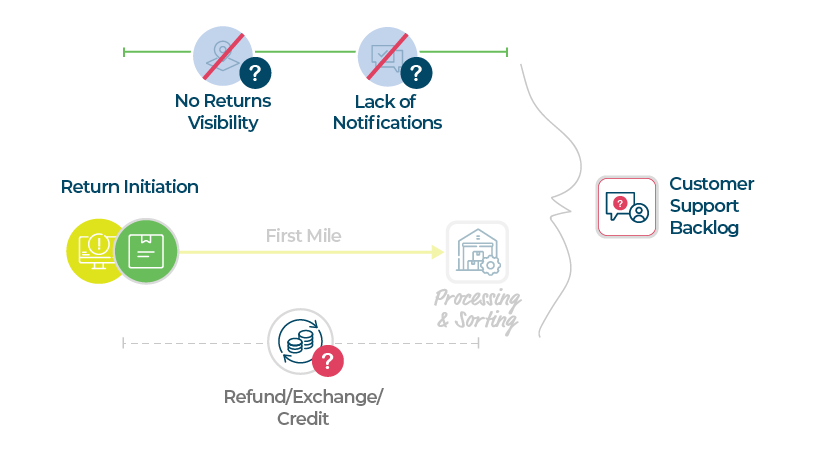
Why returns end up in your support queue
Returns are usually treated as an operations topic covering carriers, warehouses, grading and restocking. Customers don’t see that split. When they can’t see what’s happening with their return, they contact the one team they can reach: customer service.
The volume is significant. The National Retail Federation and Happy Returns estimated that 19.3% of online sales was returned in 2025. Each of those returns is a chance for the customer to have a question.
The industry even has a name for these contacts: WISMR, short for “where is my return?” or “where is my refund?” It’s the returns version of WISMO (“where is my order?”). Both come from the same root cause: a status the customer can’t see.
The January effect: peak returns arrive after peak sales
Peak doesn’t end when sales slow down. Order questions build while parcels are in transit, and returns questions follow a few weeks later, after the holidays.
That timing matters for customer service. Your busiest returns period starts just as many teams expect things to calm down. NRF research found that 43% of retailers planned to hire seasonal staff specifically to handle returns. Extra staff can absorb more contacts, but they do nothing to stop the questions being asked in the first place.
Four signs your customer service team is acting as a returns team
Industry figures on how many support contacts relate to returns vary, and many have no primary source. The most reliable benchmark is your own data. Run these four checks.
1. A large share of your contacts mention returns or refunds
Filter last month’s tickets by tags or keywords such as “return”, “refund” and “exchange.” If they make up a large share of your volume, it’s likely a visibility problem.
2. Most refund contacts ask “When do I get my money?”
Pick 20 recent refund tickets and sort them into two groups: complaints about the refund outcome, and questions about its timing or status. If most are about timing, the refund process may be working fine while customers simply can’t see it.
3. Agents chase return status across several systems
Ask an agent to trace one return from label to refund. Count the tools they open, such as a carrier portal, a warehouse inbox or a spreadsheet. Every extra system adds handling time and makes the answer less certain.
4. Your contact volume rises in January, not December
Compare weekly contact volume for December and January last season. If January is higher and the extra volume is returns-related, your team is absorbing the back end of peak.
What these contacts really cost
The cost goes beyond agent time. A WISMR contact means the customer has already lost confidence in the process, and returns experience affects whether people buy again. In our Consumer Research report, we found that 62% consumers would stop using a retailer after a bad returns experience. More broadly, PwC’s 2025 Customer Experience Survey found that 29% of consumers have stopped buying from a brand because of poor customer experience.
When a customer contacts you about a return, your team has to spend time on the question, and the brand risks losing a future sale.
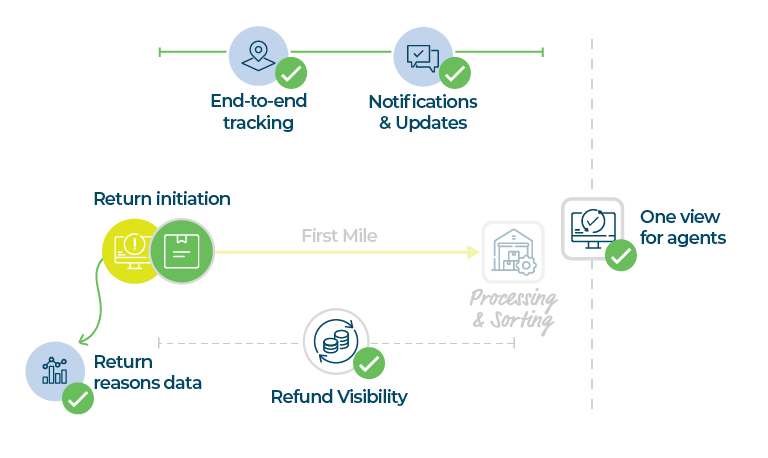
How to reduce returns contacts at the source
Answering faster is the wrong goal. The aim is to answer the question before the customer asks it.
- Self-service return initiation: Let customers register returns online through a branded portal, rather than by email or phone.
- End-to-end tracking: Give customers tracking from drop-off to receipt, and send updates at each milestone without waiting to be asked.
- Refund visibility: Tell customers when their return has been received and when the refund has been triggered. That one update answers the most common question.
- One view for agents: Give customer service a single place to see the status of every return, across carriers and markets.
- Data from return reasons: Capture structured reason data so you can fix the product, sizing or listing issues behind repeat returns.
ReBound’s consumer portal, returns tracking and customer service portal bring these steps into one returns flow.
Image, Team of ReBound professionals having a conversation, smiling at each other. They are holding notebooks, tablets and a laptop. ReBound branded merged arrows passing through them.
Fix it before the next peak
Peak itself is the worst time to change a returns process, but it’s the best time to measure one. The contact data you collect this December and January shows how much of your team’s time returns are taking.
Is your customer service team running your returns? Take our 5-question self-check and find out where your returns contacts come from.
Frequently asked questions
WISMR stands for “where is my return?” or “where is my refund?”. It covers any customer contact asking whether a return has arrived or when the refund will be paid. It’s the returns version of WISMO (“where is my order?”), and both come from the same root cause: a status the customer can’t see.
Returns pass through several parties, usually a carrier, a warehouse and a finance team, and customers rarely see what happens in between. When updates stop, customers contact the one team they can reach: customer service. With an estimated 19.3% of online sales returned in 2025, even a small gap in visibility creates a lot of contacts.
Filter last month’s tickets by tags or keywords such as “return”, “refund” and “exchange,” then work out their share of total volume. Then sample 20 refund tickets and separate complaints about the outcome from questions about status. If most are status questions, the problem is visibility, not the refund process.
Returns contacts usually peak in January, a few weeks after peak sales. Order questions rise while parcels are in transit, and return and refund questions follow once the holidays are over. That’s why many teams see contact volume stay high, or even rise, after the sales peak has passed.
Tell customers about their return before they have to ask. Send updates when the parcel is dropped off, when it’s received and when the refund is triggered. Self-service return registration and tracking from drop-off to refund remove most status questions. Giving agents a single view of every return also shortens the contacts that still come in.
Yes. A returns contact usually means the customer has already lost confidence in the process, and the returns experience affects whether they buy again. NRF research found that 71% of consumers are less likely to shop with a retailer again after a poor returns experience.