
Blogs, Returns Strategy, Trends
Returns Management Solutions for Every Stage
15 October 2026
A successful return involves more than moving a product back to a warehouse. It connects the customer’s request with shipping, tracking, inspection, inventory decisions and the eventual refund, exchange, credit or product recovery outcome.
The right returns management solutions bring these stages together, giving ecommerce and retail operations teams clearer control from request to resolution. For retailers evaluating returns management services, the central question is not simply which features are available. It is whether the technology, logistics and processing model can support the complete returns journey across every relevant market.
Table of Contents
- From Return Initiation to Refund
- Processing and Sorting
- Returns Visibility and Restocking
- Key Considerations for Global Operations
- Returns Service Models
- Finding the Right Returns Service Model
- Frequently Asked Questions (FAQs)
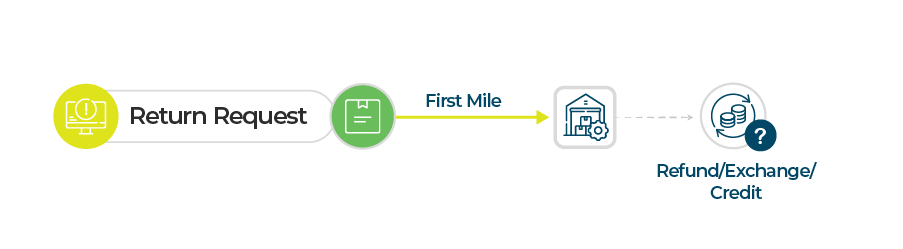
From Return Request to Refund, Exchange or Credit
The returns management process begins before a product enters the reverse logistics network. It starts when the customer requests a return and the retailer determines whether the product is eligible, which return methods are available and how the return will be resolved.
A structured ecommerce returns management journey may include:
- Identifying the original order and product
- Checking return eligibility against the retailer’s policy
- Capturing the reason for the return
- Presenting relevant drop-off or collection options
- Providing a return label or digital alternative
- Tracking the parcel through the returns network
- Offering a refund, exchange, replacement or store credit
- Communicating the return’s progress to the customer
Connecting these steps helps prevent the customer-facing journey from becoming separated from the physical movement and processing of the product.
Building a Clearer Customer Returns Process
Customers need to understand whether an item can be returned, how to send it back and what will happen next. Retail operations teams need the same journey to apply return policies accurately and provide reliable information about each return.
Customer returns management therefore needs to balance convenience with operational control. A completely unrestricted process can create unnecessary cost and complexity, while an unclear or inflexible journey can increase customer-service enquiries and make returns more difficult to complete.
A carefully designed journey can present return methods and resolutions according to the retailer’s policies, the order, the product and the customer’s location. This gives the customer relevant options while allowing the retailer to retain control over the process.
How Exchange-First Flows Can Reduce Refund Costs
An exchange-first flow gives the customer the opportunity to choose another size, colour or product instead of immediately requesting a refund. Store credit or a replacement may also be presented where appropriate.
This does not mean making refunds difficult to access. The objective is to make relevant alternatives visible when the customer may still want to purchase from the retailer.
Exchange-first journeys are most effective when they are connected to accurate product and inventory information. The customer needs to know whether the preferred alternative is available, while the retailer needs a process for reserving, dispatching and tracking the replacement.
When designed appropriately, an exchange-first approach may help preserve more customer purchases and reduce the number of transactions that end in a refund. The actual outcome will depend on the retailer’s products, inventory availability, return policy and customer preferences.
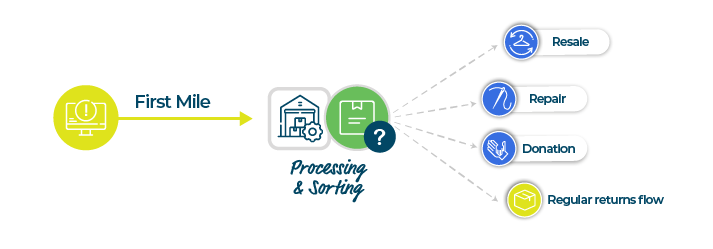
Inspection, Restocking, Refurbishment and Disposition
Receiving the product is only one part of product returns management. The retailer must also establish what has arrived, what condition it is in and what should happen to it next.
A structured inspection process may record:
- The returned product and order
- The stated reason for the return
- The product’s condition
- Missing components or packaging
- Visible damage
- Whether the item meets the retailer’s return rules
- The most appropriate next destination
These findings can inform the customer resolution, inventory status and recovery route. They can also create useful operational data about why products are being returned and what condition they are in when they arrive.
Restocking Eligible Products
Products that meet the retailer’s agreed condition criteria may be returned to available inventory. The specific process depends on the product category, sales channel and inventory model.
To support effective restocking, the returns process needs to coordinate inspection results with the relevant inventory and warehouse workflows. Otherwise, a sellable product may remain unavailable even after it has been received and assessed.
The value of faster restocking is not limited to warehouse efficiency. It can also increase the opportunity to resell suitable products while customer demand still exists.
Refurbishment and Alternative Recovery Routes
Not every returned product can go directly back into primary inventory. Some items may require cleaning, repair, repackaging or refurbishment before they can be resold through an appropriate channel.
Other products may need to be routed towards:
- Secondary-market resale
- Recycling
- Donation
- Supplier return
- Another approved disposition route
The correct outcome depends on the product’s condition, value, location and the retailer’s rules. A consistent decision framework helps operations teams direct returned products towards an appropriate destination instead of applying one outcome to every item.
Using Returns Inspection Analytics
Returns inspection analytics connect physical inspection results with broader returns data. This can help retailers compare the reason selected by the customer with the condition recorded during processing.
Over time, this information may help identify recurring patterns relating to products, descriptions, packaging, fulfilment or customer expectations. It can also show how returned inventory is being distributed across restocking, refurbishment, resale and other disposition routes.
The purpose is not simply to report how many items were returned. It is to build a clearer picture of what is being returned, why it is coming back and what happens after it arrives.
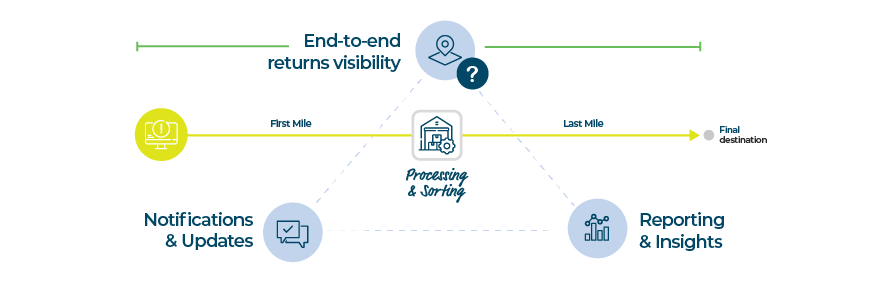
Returns Visibility and Inventory Coordination
Returns create an inventory challenge because products are moving towards the business rather than towards customers. While a return is in transit or awaiting inspection, its eventual status may be uncertain.
A connected returns management platform can provide visibility across stages such as:
- Return requested
- Return authorised
- Parcel handed to the carrier
- Return in transit
- Item received
- Inspection completed
- Resolution approved
- Inventory or disposition status updated
This shared view can support customer-service, warehouse, inventory and ecommerce teams. Instead of relying on separate carrier updates or manual enquiries, relevant teams can access consistent information about the return’s status.
Connecting Returns with Inventory Decisions
A return should not be treated as available inventory until the relevant condition and processing checks have been completed. However, the business still needs visibility into products moving back through the network.
Connecting return activity with inventory coordination can help answer questions such as:
- Which products are expected to come back?
- Where is each item in the returns process?
- Which products have completed inspection?
- Which items can be restocked?
- Which items require refurbishment or another route?
- How long are products remaining within each processing stage?
This returns visibility allows retail operations teams to understand both the customer resolution and the product outcome.
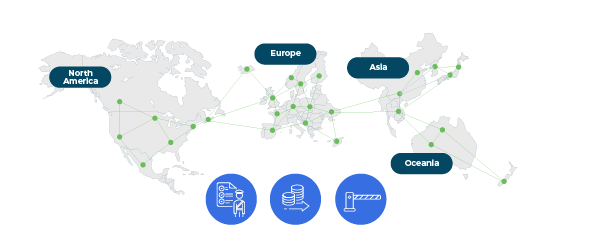
International Returns Management: Key Considerations for Global Operations
International ecommerce introduces additional complexity to the returns journey. The customer may be in a different country from the retailer’s primary warehouse, while the product may need to move through local carriers, consolidation locations, customs processes and regional handling points.
International returns management connects the customer’s local return experience with the retailer’s wider logistics and inventory strategy.
International Returns Logistics
A cross-border return does not necessarily need to travel directly from the customer to the retailer’s original fulfilment centre. Depending on the operating model, the journey may include:
- A local drop-off or collection service
- A first-mile carrier
- A domestic return location
- Consolidation with other returned products
- Cross-border linehaul
- Customs documentation and clearance
- A regional or central processing location
- Routing to a final inventory or recovery destination
Consolidating returned products before cross-border movement may be appropriate within some returns networks. In other cases, products may be inspected or routed locally. The most suitable model depends on return volumes, product characteristics, available infrastructure and the retailer’s recovery priorities.
Which Features Support Cross-Border Returns?
Retailers evaluating international returns management should consider whether a prospective service supports:
- Relevant carrier coverage
- Local drop-off and collection options
- Market-specific customer instructions
- Cross-border tracking
- Regional routing rules
- Consolidation where required
- Customs information and documentation
- Multiple languages and currencies
- Connections with relevant ecommerce and operational systems
The required capabilities will vary by market. A service that works in one country may not automatically provide the same customer options or operational model elsewhere.
Balancing Global Consistency with Local Returns Expertise
Effective international returns management provides customers with a consistent experience across markets while adapting the journey to local expectations and infrastructure. This means selecting the most convenient and commercially effective return initiation and first-mile options available in each territory.
Returned products do not always need to travel back across borders. Where appropriate, items can be processed locally, held at regional hubs and made available for the next sale within that market. This can reduce transport costs and emissions while helping retailers recover value more efficiently.
A returns operator with local processing, consolidation and inventory-routing capabilities can offer a significant advantage at international scale, connecting a consistent customer experience with smarter decisions about where returned products should go next.
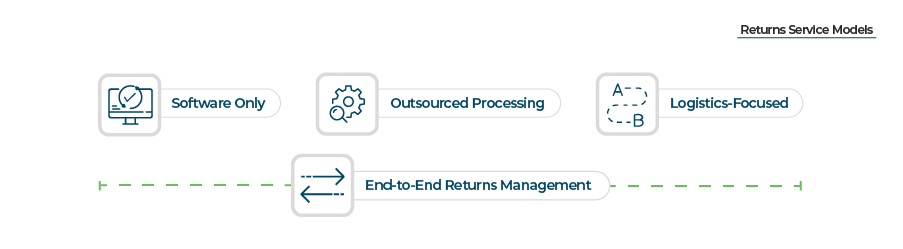
Returns Service Models
Returns management services can be delivered through several models. Understanding these differences helps retailers compare the actual scope behind each proposal.
Software-Only Returns Management
A software-only model focuses on the digital return journey and related data. The retailer may continue to manage carrier agreements, warehouse operations, inspection and disposition internally or through existing partners.
This model may suit businesses that already have strong logistics and processing capabilities but need a more structured customer journey and greater returns visibility.
Outsourced Returns Processing
An outsourced processing model transfers defined warehouse activities to an external provider. These activities may include receiving, registration, inspection, grading, repacking and disposition.
Retailers may consider this model when they need capacity in additional markets, more consistent processing or support for product categories that require specialist handling.
Logistics and Carrier Management
A logistics-focused service coordinates the physical movement of returned products through carriers, drop-off locations, collections, hubs and cross-border networks.
This model may be especially relevant for retailers that need broader international coverage but already manage the customer-facing technology or final product processing elsewhere.
Fully Outsourced End-to-End Returns Management
A fully outsourced model puts the operational complexity of returns in the hands of one specialist provider. Through a central management tower, the provider orchestrates the end-to-end journey, connecting returns software, carrier coordination, international logistics, local processing and returns data within one managed service.
This gives brands greater control and visibility without the day-to-day hassle of coordinating multiple carriers, warehouses and processing partners. With one provider overseeing the operation from return initiation to final product disposition, internal teams can focus on their core priorities while the returns network is managed on their behalf.
For retailers operating across multiple markets, this model provides a stronger foundation for consistent customer experiences, efficient local execution and scalable international returns management.
Should You Choose Software-Only or Fully Managed Returns?
The right service model depends on the retailer’s existing capabilities and the gaps that need to be addressed.
A software-only solution may be suitable when the retailer:
- Already has established carrier and warehouse arrangements
- Wants to retain direct control over physical operations
- Primarily needs a digital portal, policy rules and reporting
- Has internal resources to manage integrations and exceptions
A more fully managed service may be suitable when the retailer:
- Needs support across multiple stages of the journey
- Is expanding into international markets
- Wants to coordinate fewer separate operational providers
- Needs additional logistics or processing capacity
- Requires a more connected view across technology and physical operations
The decision should not be reduced to software versus outsourcing alone. Retailers can also use a blended model, retaining control over some stages while using external support for others.
The Benefits of Connected Returns Management
Connected returns management can give retailers a clearer view across the customer, product and operational journey.
Potential benefits include:
- A more consistent customer returns experience
- Greater visibility from request to resolution
- Better coordination between ecommerce, logistics and processing
- More structured inspection and product routing
- Faster identification of items suitable for restocking
- Improved understanding of return reasons and product condition
- A service model that can support additional markets or volumes
- Clearer decision-making around returned inventory
These benefits do not come from technology alone. They depend on the returns workflow, integrations, logistics network, processing rules and responsibilities being designed as one connected operation.
Finding the Right Returns Management Solution
The right returns management solution should do more than help customers generate a label. It should connect every stage of the journey, from the initial return request and customer resolution to the movement, processing and eventual recovery of the product.
For ecommerce and retail operations leaders, evaluating returns management services means looking beyond individual features. Technology, international logistics, processing capabilities, integrations and service models all need to work together around the needs of the business.
No two returns operations are the same. Explore how ReBound’s modular, end-to-end returns management services can be tailored to your markets, operational requirements and growth plans.
FAQs (Frequently Asked Questions)
Ecommerce returns management solutions connect the online customer journey with the movement and processing of the returned product.
They may support:
- Digital return requests
- Eligibility and policy rules
- Return-reason capture
- Labels, drop-off and collection options
- Carrier coordination and tracking
- Refund, exchange or credit workflows
- Inspection and grading
- Inventory updates
- Product routing and disposition
- Returns reporting and analytics
The scope varies significantly between providers. Some solutions concentrate on the customer-facing software, while others combine technology with logistics, warehouse processing or a broader managed service.
Retailers should therefore evaluate the complete operating model rather than assuming that every returns platform includes the same capabilities.
A returns management platform commonly provides a digital interface through which the customer can request and manage a return. It can also give the retailer tools to define return rules, control available methods and monitor return activity.
Depending on the provider and implementation, a platform may include:
An online returns portal
Return-policy and eligibility controls
Return-method selection
Customer communication
Carrier connectivity
Return tracking
Exchange or store-credit options
Reporting and returns data
Connections with other ecommerce and operational systems
Physical logistics and processing may be included within a wider service, delivered through partners or managed separately by the retailer. This distinction should be clear when comparing providers.
Choosing a returns management company begins with defining the operation that the provider needs to support.
Retailers should ask prospective providers:
- Can the service support the complete journey?
- Which markets and customer return methods are available?
- How will the service connect with existing systems?
- What processing capabilities are included?
- What level of returns visibility is available?
- How flexible is the service model?
- How will implementation and ongoing responsibilities be divided?
If you’d like to learn more about choosing the right returns management software, explore our Returns Management Software Evaluation Guide.
Returns routing determines where a returned product should go based on defined information about the item and the operation.
Rather than sending every return to one central destination, routing rules may consider:
- The customer’s location
- The product category
- The product’s expected value
- The likely condition
- Available processing capabilities
- Inventory requirements
- Resale or refurbishment options
- Transport requirements
The objective is to select an appropriate route for each return. A high-value product may require specialist inspection, while another item may be suitable for local processing or consolidation.
The quality of the routing decision depends on the information available when the return is initiated and after the product has been inspected.
Outsourcing may be worth considering when the existing operation struggles to accommodate return volumes, geographic coverage or processing requirements.
Potential signals include:
- Increasing return volumes against internal resources
- Processing backlogs during peak periods
- Limited local infrastructure in important markets
- Inconsistent inspection and grading
- Poor visibility after items reach a returns location
- Difficulty coordinating several warehouses or logistics partners
- Internal capacity being diverted from higher-priority activities
- Returned products remaining unavailable for resale for too long
Outsourcing does not remove the retailer’s responsibility for defining policies, expected outcomes and performance requirements. A successful arrangement still needs clear ownership, data exchange and operational governance.