
Blogs, Returns Strategy
For Shopify stores focused on customer experience, returns are an easy win
10 July 2026
Plenty of brands on Shopify know they’re not competing on price or product. Their competitors are readily available, and their customers are ready to switch.
Instead, they’re competing on a deeper connection: the customer experience they provide to their shoppers, and the trust and loyalty that comes with getting it right.
Even among brands that are nailing their customer experience (CX), there’s still a huge gap that’s often forgotten:
They’re investing in CX up to the point of delivery – but they’re not giving it the same attention on the return journey.
Here’s why they should, and what good customer experience looks like with your Shopify returns.
Table of Contents
- Do returns really make a difference to CX?
- What does good CX look like with Shopify returns?
- Returns without friction
- Transparent communication
- Fast refunds
- FAQs
Do returns really make a difference to CX?
Great customer experience runs across every customer touchpoint: from the first moment of interaction to the last. That means returns by default are an important part of the customer experience on Shopify.
When returns aren’t handled well, either neglected, underdeveloped, or simply seen as a cost to minimise, a negative experience can quickly undo all the goodwill you’ve built with your customer experience during the sales process.
National Retail Federation, 2025
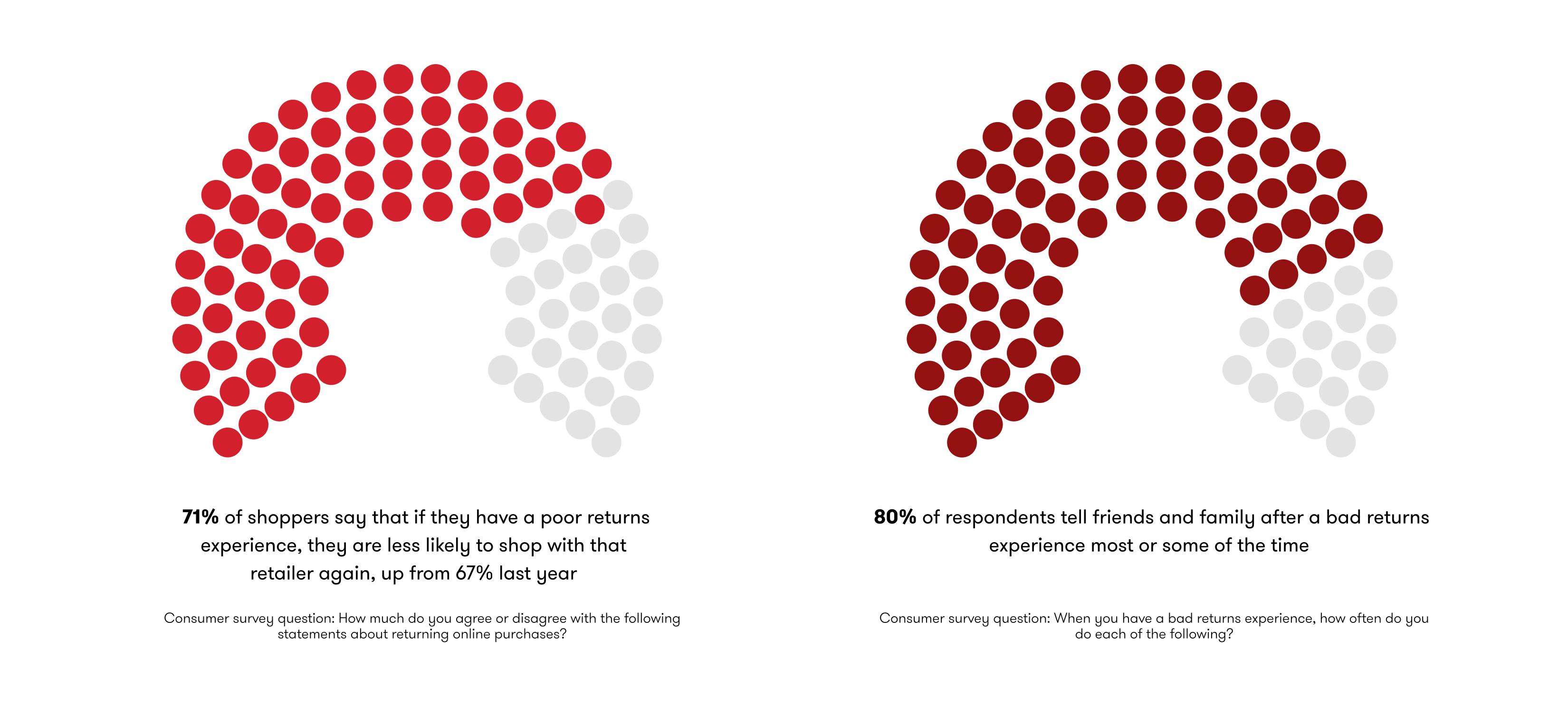
Nearly three-quarters (71%) of shoppers are less likely to use a retailer again after a poor returns experience, and 81% say they would abandon a retailer after experiencing issues with their returns process.
It works both ways:
A positive return experience causes 70% of shoppers to buy more, and 89% recognise that a positive returns experience affects their future purchases.
When Shopify stores get their returns process right, it can have a huge effect on their overall customer experience, leading to:
- Higher retention
- More trust and customer loyalty
- A higher customer lifetime value.

As a part of the customer’s journey with your brand, it makes sense for returns to have such a big impact on CX. However, there’s an extra psychological layer at play. It helps to explain why the returns experience is a dealbreaker for such a high percentage of shoppers:
When shoppers return a product, they’re already in a negative state of mind. There’s disappointment with their order, the expectation of a long wait, and uncertainty around whether your store will accept their return.
If the return experience goes badly, it’s:
- Adding to the existing disappointment
- Creating a stronger total negative experience
- Making it more likely they’ll avoid your brand in the future.
However, when your brand delivers a positive returns experience, you’re turning a bad situation into a good one. That upswing of emotion creates a lasting impression with your customer, cementing trust and loyalty that’s often stronger than it is with a positive pre-sale experience.
Returns only happen when things haven’t gone to plan. So the way you respond has a stronger effect on how your customers feel.
What does good CX look like with Shopify returns?
On the returns side of the sale, the best customer experience gives your shoppers three things:
- Returns without friction
- Transparent communication
- Fast refunds.
Here’s how that looks in practice, and where the native features of Shopify won’t always be enough:
-
Returns without friction
For your Shopify customers, returns aren’t glamorous or fun. They’re something that ‘has to be done’ (and usually at a time when they’re feeling disappointed or frustrated).
So the easier you can make it — with minimal effort and hassle throughout the whole process — the easier it becomes to deliver a positive customer experience.
| 94%
of shoppers say that ‘ease of return’ is crucial |
92%
of consumers say they would buy again if the returns process is easy |
From a shopper’s perspective, your online returns portal is the first touchpoint in their return journey. And that makes it one of the most important things to get right.
Shopify’s native ‘self-serve’ returns portal already comes with good functionality. Customers can:
- Log in to their customer account
- See their order history
- Select specific items within an order for return.
Now, the native Shopify portal has its limitations. Your customers aren’t able to:
- Request exchanges
- Choose their preferred carrier
- Choose a drop-off location for their parcel.
Instead, you need to add exchanges and send shipping information and labels to the customer manually after approving a return.
With a third-party integration (like the ReBound Shopify App), you can give your customers a full-featured returns portal — one that’s been tested, refined, and improved with multiple ReBound clients across the globe.

With the ReBound portal on your Shopify store, your customers can:
- Find an order
- Choose which items they want to return or exchange
- Choose a carrier option
- Make a payment (if applicable)
- Get their return label or QR code.
For your customers, it’s a one-stop returns initiation that gives them everything they need in one place — without leaving your Shopify store, and without additional messaging after the return is approved.
-
Transparent communication
From a shopper’s perspective, returns are mostly a waiting game. They initiate the return and drop-off their parcel, then sit and wait for days, wondering what’s happening and whether their refund will ever appear.
That’s not a positive customer experience. And it’s not what your shoppers expect:
ReBound Consumer Research Report 2025
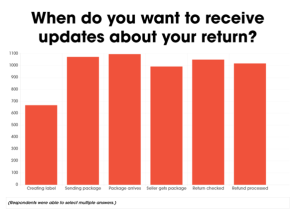
Consumers want updates on the status of their return, with communication from the seller at every stage of the process.
With the native features in Shopify returns, customers can log in through the portal and see the simplified status of their return (whether it’s pending, approved, or rejected, for example). They can also get automated email notifications with a similar level of granularity:
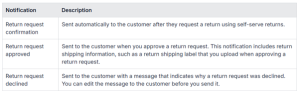
In order to give your customers real-time tracking, with live updates on location, verification, and processing, you need a third-party returns integration for your Shopify store.
With transparent communication that informs your customers at every stage of the return, you’re able to:
- Reduce your customers’ anxiety and impatience
- Make them feel ‘seen’ and ‘in the loop’
- Show that your returns system is active, organised, and competent
- Reduce your customer service tickets (WISMO or WISMR — ‘Where is my order/return?’).
All of these things add up to a positive experience for your customers — one that builds trust and gives them confidence in their future shopping.
-
Fast refunds
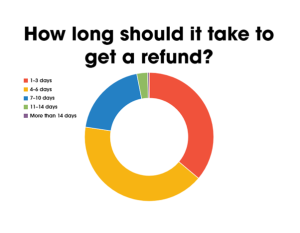
Shoppers today see returns as an everyday part of online shopping. They expect to be able to return freely and often, and they expect their refunds to appear quickly.
ReBound Consumer Research Report 2025
In practice, it’s a difficult balance for merchants to achieve:
You want to give your customers fast refunds. But you need time to receive the parcel, and verify its contents and condition.
It’s a logistics problem. And since Shopify isn’t a logistics platform, there’s nothing in the native Shopify returns system that can help to safely speed up your refund times.
Instead, merchants are using a third-party logistics network — ideally, one that’s already connected to the returns integration you use.
With the ReBound App connected to your Shopify store, you’re getting a customer returns portal and an expert returns management service. However, you also get access to a global physical network of warehouses, local verification hubs, and processing services.
That means you can:
- Reduce the first-mile journey for returned packages (saving travel time)
- Get parcels checked and verified at hubs close to the customers’ location (and issue refunds based only on the items in the parcel, therefore preventing fraud)
- Get physical confirmation sooner (so you can confidently issue refunds faster).
For your customers, that means less time waiting, and a happy result from a lightning-fast refund.
For Shopify stores, that means protecting your business from losses and fraud, while still delivering the positive experience your customers expect.
FAQ
Yes,but not always for brands that want a more complete returns journey. Shopify supports basic return requests and status updates, but features like exchanges, carrier choice, drop-off options, live tracking, and more detailed communication usually need a third-party returns integration.
Returns often happen when a customer is already disappointed, so the experience can have a bigger emotional impact than a normal purchase journey. A smooth, transparent return can rebuild trust, while a poor return can make customers less likely to buy again.
Shopify stores can reduce return-related questions by keeping customers updated throughout the return journey. Clear tracking, proactive notifications, and better visibility help customers feel informed without needing to contact support.
Faster refunds depend on better visibility and verification in the returns journey. By using return hubs, parcel tracking, and item-level checks, brands can confirm what has been sent back sooner and issue refunds faster without blindly absorbing fraud or loss.