
Blogs, Returns Strategy, Trends
Could Your Unsold Goods Be Worth More Than You Think?
02 July 2026
As new legislation encourages retailers to rethink how they manage excess inventory, the real opportunity lies beyond compliance. Here’s how a smarter circular strategy can help maximise product value, extend product lifecycles and unlock new commercial opportunities.
For years, excess inventory has been treated as an operational challenge. Whether it’s end-of-season stock, customer returns or overproduction, retailers have often had to balance recovering value with clearing inventory efficiently.
Now, that balance is shifting.
With the EU’s Ecodesign for Sustainable Products Regulation (ESPR) introducing a ban on destroying unsold apparel, clothing accessories and footwear for large companies from 19 July 2026, retailers are rethinking how they manage unsold goods.
The legislation comes in response to a significant challenge: every year in Europe, an estimated 4–9% of unsold textiles are destroyed before they’re ever worn, generating around 5.6 million tonnes of CO₂ emissions. These figures highlight not only the environmental impact of excess inventory, but also the untapped potential of products that still have value to offer.
While ESPR is driving the conversation, the real opportunity lies in unlocking more value from products that might otherwise be written off.
- Unsold Goods Still Have Value
One of the biggest shifts retailers can make is changing how they view unsold inventory.
Products that haven’t found their first customer still represent materials, manufacturing effort and potential value. Rather than focusing on disposal, businesses are increasingly looking at how they can extend product lifecycles, recover revenue and keep products in circulation for longer.
This isn’t just about sustainability. It’s about making smarter use of the products that already exist.
- Finding the Right Circular Pathway Matters
There is no single solution for managing unsold goods.
Different products require different outcomes depending on their condition, value and demand. While some items may be ideal for resale, others may be better suited to rental, repair or donation.
The goal isn’t simply to prevent products from being destroyed—it’s to unlock the greatest possible value from every product while keeping it in use for as long as possible.
For example:
- High-quality products can generate additional revenue through resale.
- Premium products may deliver greater long-term value through rental.
- Items with minor defects can often be repaired before returning to market.
- Wearable products that can no longer be sold may still create significant social impact through donation.
Matching products to the right circular pathway helps businesses recover value, reduce waste and maximise product utilisation.
- Circularity Needs to Work at Scale
While many retailers recognise the value of circularity, making it work operationally can be a challenge.
Managing multiple resale platforms, repair providers, rental partners, charities and logistics providers can quickly become complex. Determining the right destination for every product adds another layer of decision-making.
That’s where Rebound helps.
Rather than expecting retailers to build and manage their own network of circular partners, Rebound’s Circularity Network brings everything together in one place.
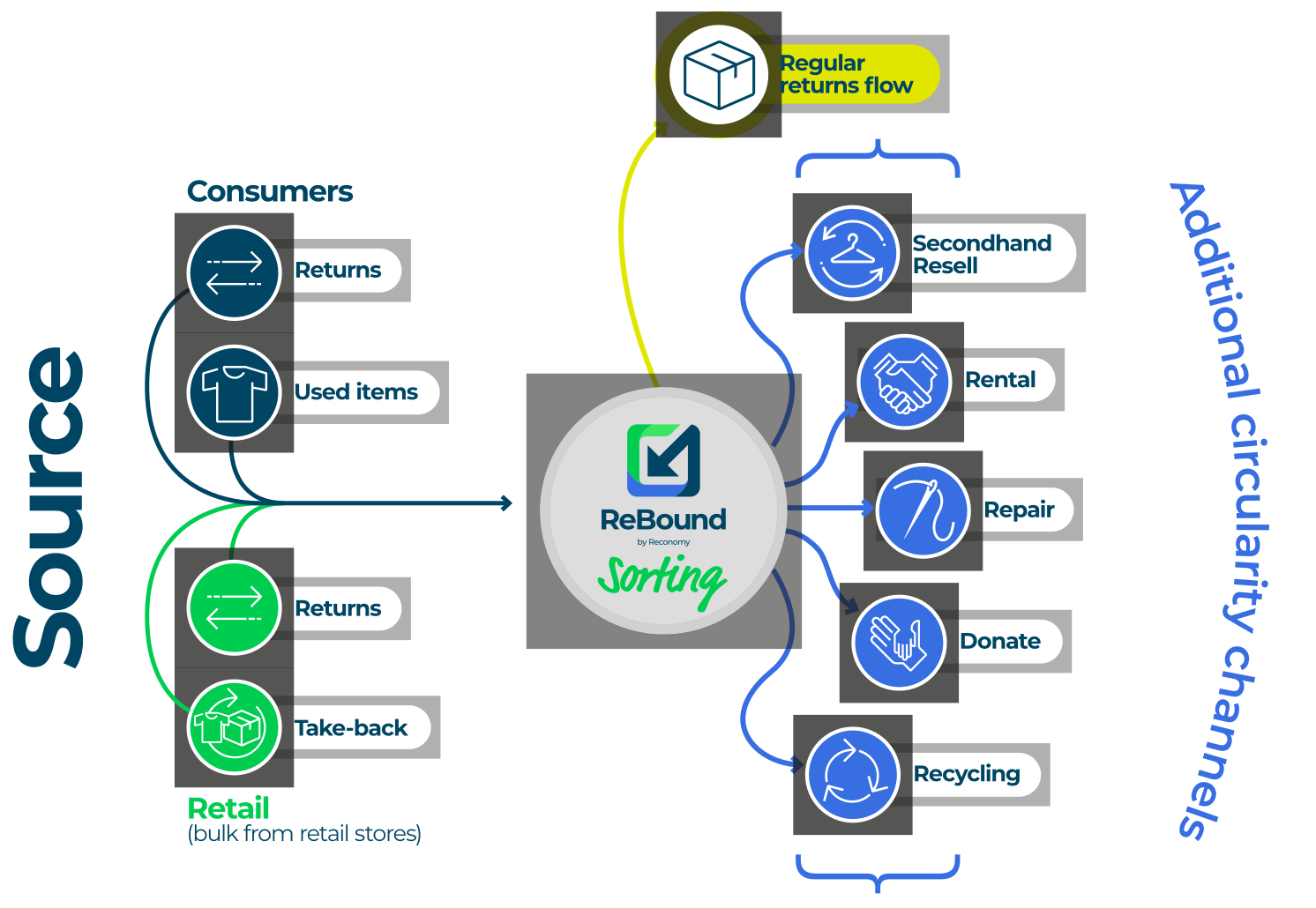
Through a single, integrated solution, retailers can access:
- Product sorting and assessment
- Recommerce and alternative sales channels
- Rental solutions
- Repair services
- Donation networks
- Integrated logistics to connect every stage of the journey
By assessing each product individually, Rebound helps retailers identify its next best use—whether that’s resale, rental, repair or donation—maximising both product value and useful life.
The result is a simpler, more scalable approach to circularity that supports both commercial and sustainability goals.
Looking Beyond Compliance
While ESPR is accelerating conversations around unsold goods, forward-thinking retailers are recognising that this is about far more than meeting regulatory requirements.
A well-designed circular strategy can help businesses:
- Recover value from excess inventory
- Reduce write-offs and storage costs
- Improve operational efficiency
- Extend product lifecycles
- Strengthen sustainability credentials
- Support evolving customer expectations around circularity
With the right expertise, partners and logistics network in place, retailers can build a scalable approach that not only supports compliance but also creates long-term commercial and environmental value.
Final Thoughts
The conversation around unsold goods is changing.
What was once viewed as an inventory challenge is becoming an opportunity to recover value, extend product lifecycles and make better use of the products that already exist.
At Rebound, we’re helping retailers make that transition through our Circularity Network, connecting brands with trusted circular partners and the logistics needed to move products through the most appropriate pathway.
The question is no longer what to do with unsold goods.
It’s how much value—and how much additional life—you can unlock from every product.
Get in touch with our team to discuss how ReBound’s circularity solutions can support your business goals.
FAQs
The Ecodesign for Sustainable Products Regulation (ESPR) is an EU regulation designed to improve the sustainability and circularity of products. As part of the legislation, large companies will be prohibited from destroying unsold apparel, clothing accessories and footwear from 19 July 2026.
For retailers, this means it’s more important than ever to have a clear strategy for managing unsold goods. Rather than viewing the regulation as simply another compliance requirement, many businesses are using it as an opportunity to recover more value from excess inventory through circular solutions such as resale, rental, repair and donation.
Preparation starts with understanding what happens to your unsold goods today. Retailers should review their existing inventory processes, identify opportunities to recover value, and consider how products can be redirected into the most appropriate circular pathway.
Building a scalable strategy before the legislation takes effect will not only support compliance but also help reduce write-offs, improve operational efficiency and unlock new commercial opportunities.
Retailers that delay preparing for ESPR risk being unprepared for the new requirements once they take effect. Depending on where they operate, businesses that fail to comply may also face enforcement action or penalties set by individual EU Member States. Preparing early gives retailers time to review how they manage unsold goods, reduce write-offs and build scalable circular processes before the legislation comes into force.
There isn’t a one-size-fits-all solution. The most effective approach depends on the product’s condition, value and demand. High-quality items may be ideal for resale, premium products may generate greater long-term value through rental, products with minor defects can often be repaired, while others may be better suited to donation.
The key is ensuring every product reaches its next best use, maximising both its value and useful life.
Managing multiple resale platforms, repair providers, charities and logistics partners can quickly become complex. Rebound’s Circularity Network simplifies the process by bringing trusted circular partners together in one integrated solution.
By assessing each product individually and identifying its next best use, retailers can recover more value from unsold goods, extend product lifecycles and build a scalable circular strategy that supports both commercial and sustainability goals.